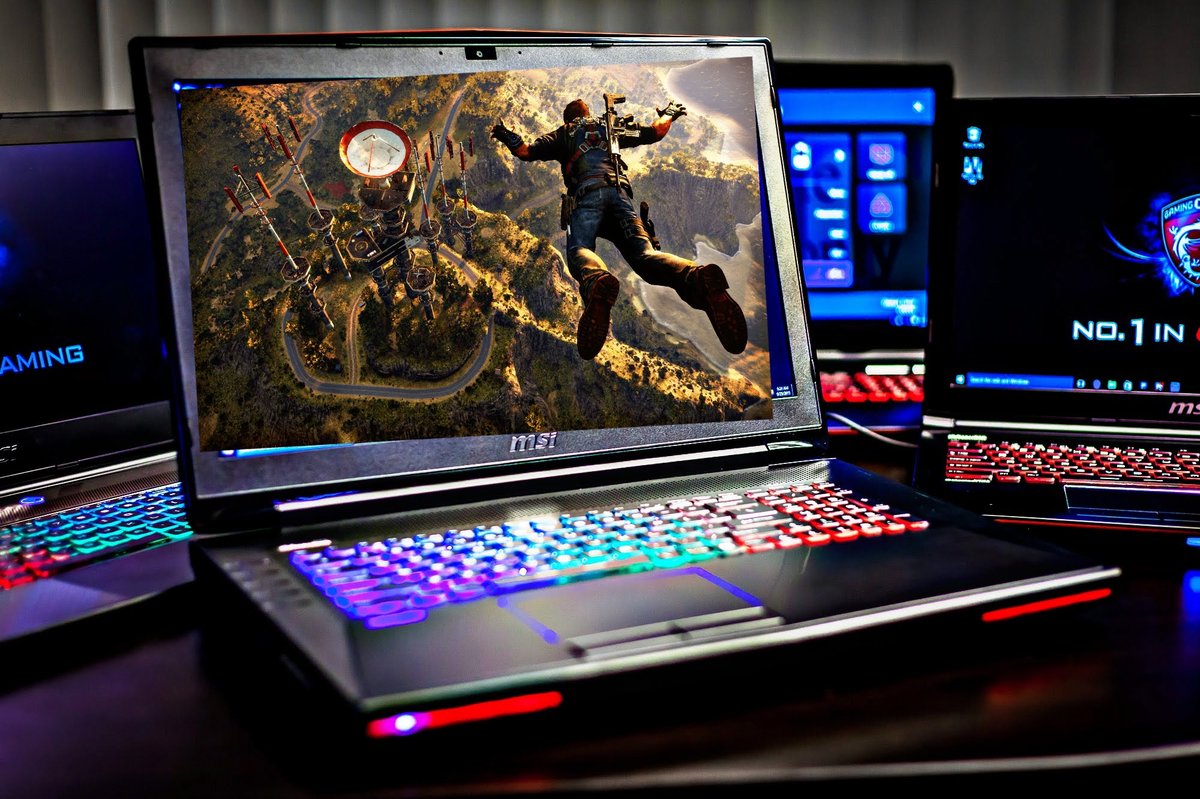
You're a gamer, a creator, or simply someone who demands serious horsepower on the go. But with more laptops blurring the lines between work and play, figuring out who should buy a gaming laptop? Ideal scenarios & users isn't as straightforward as it used to be. Today's market, especially heading into 2025, offers a dizzying array of options, balancing raw performance with sleek design, portability, and, of course, cost.
This isn't about whether gaming laptops can game – that much is obvious. It's about discerning if a dedicated gaming machine truly fits your specific needs, lifestyle, and budget. Let's cut through the noise and pinpoint exactly when a gaming laptop transforms from a luxury into a genuinely smart investment.
At a Glance: Key Takeaways
- You need portability: Gaming laptops are ideal if you game, create, or work with demanding applications away from a fixed desk.
- Desktop replacement: For those who want high-end performance without the footprint of a desktop PC, a gaming laptop can be a compact, all-in-one solution.
- Specific workloads: Beyond gaming, these machines excel at video editing, 3D rendering, CAD, and AI tasks thanks to powerful GPUs and CPUs.
- No compromises: You want the best possible frame rates, graphical fidelity, and display features (high refresh rates, vibrant colors) in a portable form factor.
- Budget flexibility: While often pricier, gaming laptops offer a range from entry-level to enthusiast-tier, meaning there's likely a model that fits your wallet.
Are You the Ideal Gaming Laptop User? Define Your Needs
Let's be frank: not everyone needs a gaming laptop. If your idea of "gaming" is Candy Crush or light indie titles, you're likely better served by a standard ultrabook. However, if any of the following scenarios resonate with you, a gaming laptop could be your perfect companion.
The Nomad Gamer: Unchained from the Desktop
This is arguably the most common and compelling reason. If your life involves frequent travel, regular commutes, or simply bouncing between different rooms in your house, a desktop PC is a non-starter. A gaming laptop allows you to take your entire digital world with you. From intense esports matches at a friend's house to tackling the latest AAA single-player epic in a hotel room, portability is key. You're not just buying a machine; you're buying freedom.
The Creative Pro on the Go: Power Beyond Gaming
Modern gaming laptops are beasts for more than just gaming. Their high-performance GPUs (like Nvidia's RTX 50-series) and multi-core CPUs (Intel Core Ultra Series 2 or AMD Ryzen AI) are fantastic for professional applications. Are you a:
- Video Editor? Render 4K footage faster.
- 3D Modeler/Animator? Speed up complex renders and simulations.
- Graphic Designer? Handle large files and intricate designs with ease.
- AI/Machine Learning Enthusiast? Leverage GPU acceleration for model training.
These machines offer a compact workstation that can tackle demanding tasks that would bring a lesser laptop to its knees.
The Desktop Replacer: All-in-One Powerhouse
Perhaps you crave desktop-level performance but lack the space for a full tower, monitor, and peripherals, or you simply prefer a single, integrated device. A high-end gaming laptop, especially larger 16-inch or 18-inch models, can absolutely serve as a primary computer. When docked, it can drive external monitors, keyboards, and mice, giving you a desktop experience that you can simply unplug and take with you. You get the best of both worlds without the hassle of building and maintaining a separate desktop rig. This consideration is key if you're asking yourself Should you buy a gaming laptop? over a traditional PC.
The Student or Professional Who Multitasks Seriously
Students studying game design, engineering, architecture, or any field requiring powerful simulation or CAD software will find a gaming laptop indispensable. Similarly, professionals who present visually intensive projects, work with large datasets, or need to run demanding proprietary software will benefit immensely. These machines are built for heavy loads, ensuring your applications run smoothly, even with multiple programs open.
The Enthusiast Seeking Premium Features
Beyond raw power, gaming laptops often pack features you won't find in most non-gaming machines:
- High Refresh Rate Displays: Essential for competitive gaming and buttery-smooth visuals.
- Advanced Cooling: Designed to sustain performance under load.
- Robust Build Quality: Often featuring metal chassis for durability and a premium feel.
- Customizable RGB Lighting: Because, let's face it, it looks cool.
If you appreciate these premium touches and demand the absolute best experience, a gaming laptop is tailored for you.
What to Look For: Navigating the Specs Maze in 2025
The gaming laptop market is highly competitive, meaning specs evolve rapidly. For 2025, here's what to keep an eye on to ensure you're getting a future-proof machine that truly delivers.
The Engine Room: GPU & CPU
These are the heart and soul of any gaming laptop, dictating performance, frame rates, and responsiveness.
Graphics Processing Unit (GPU): The Star Performer
This is the single most critical component for gaming. For 2025, you'll be looking at Nvidia's new RTX 50-series GPUs.
- Top Tier: The RTX 5090 (with a massive 24 GB of VRAM) and RTX 5080 (16 GB VRAM) offer uncompromising performance for high-resolution, high-refresh-rate gaming, even at 4K. The RTX 5070 Ti (12 GB VRAM) is also a strong contender.
- Mid-Range: The RTX 5070, RTX 5060, and RTX 5050 typically come with 8 GB VRAM. These are excellent for 1080p and 1440p gaming, balancing performance with cost.
- Crucial Detail: GPU Wattage (TGP): Don't just look at the model number! A 115-watt RTX 5060 will significantly outperform an 85-watt version, even though they share the same name. Manufacturers don't always clearly label this, so read professional reviews to find the specific GPU power (often called Total Graphics Power, or TGP). This is a game-changer for real-world performance.
- Desktop vs. Laptop GPUs: Remember, laptop GPUs are distinct from their desktop counterparts. An RTX 5070 laptop GPU will not perform identically to a desktop RTX 5070.
- Avoid Older Generations: For a 2025 purchase, stick to RTX 50-series or, at an absolute minimum, the RTX 40-series. Older GPUs offer diminishing returns and won't keep up with modern titles.
Central Processing Unit (CPU): The Brains of the Operation
While the GPU handles most of the heavy lifting for graphics, the CPU manages game logic, AI, physics, and background tasks. A weak CPU can "bottleneck" a powerful GPU, preventing it from reaching its full potential. - Intel: Look for Intel Core Ultra Series 2 H/HX chips. The "HX" designation indicates higher-wattage CPUs (up to 55 watts) for maximum performance, often found in larger, thicker laptops with better cooling.
- AMD: Consider AMD's third-gen Ryzen AI chips (e.g., Ryzen AI 9 365, Ryzen AI 9 HX 375). For peak gaming performance, the Ryzen 9 9955HX3D is a standout.
- Sweet Spot: For a high-end gaming experience, an Intel Core i7 or AMD Ryzen 7 (or their newer equivalents) is typically more than sufficient.
Memory (RAM) & Storage (SSD): Speed and Space
RAM: More is Better
- Standard: 16 GB of RAM is the new baseline for gaming laptops.
- Recommended: With modern games becoming increasingly memory-intensive, 32 GB is quickly becoming the sweet spot for enthusiast gamers and power users.
- Upgradeability: Be aware that thinner laptops (like some Razer Blades) may have soldered RAM, meaning you can't upgrade it later. Many larger models (e.g., Asus ROG Strix G16, Alienware 16 Aurora, MSI Titan 18 HX) offer user-upgradeable RAM slots, which can be a more cost-effective way to get 32 GB down the line.
Storage: SSD is Non-Negotiable - Minimum: 512 GB SSD is the absolute minimum you should consider.
- Recommended: With games routinely exceeding 100 GB, a 1 TB SSD is highly recommended. You'll thank yourself for the extra space.
- Why SSD? Solid-state drives (SSDs) are crucial for lightning-fast game loading times and overall system responsiveness. Never buy a gaming laptop with a traditional hard drive (HDD) as its primary storage.
- Upgradeability: Most gaming laptops make SSD upgrades easy and often include a second empty M.2 slot for future expansion.
The Window to Your World: The Display
An immersive display is paramount for enjoying your games.
- Sizes:
- 14-inch: Portable and compact (e.g., Asus ROG Zephyrus G14). Great for frequent travel.
- 16-inch: The "happy medium," offering excellent screen real estate and thermal space, often with a productive 16:10 aspect ratio (e.g., Razer Blade 16).
- 18-inch: Large, immersive screen, but these machines are heavy and more desk-bound (e.g., Asus ROG Strix Scar 18, MSI Titan 18 HX AI).
- Resolution:
- QHD (2560x1440 or 2560x1600): This is the current sweet spot. It offers significantly sharper images than 1080p without the extreme performance demands of 4K.
- FHD (1920x1080 or 1920x1200): Still good for budget options or maximizing frame rates with mid-range GPUs.
- UHD (3840x2400): 4K resolutions look stunning but require top-tier GPUs (RTX 5090/5080) to maintain playable frame rates in demanding titles.
- Refresh Rate: This determines how many times the screen updates per second.
- Minimum: Aim for at least 120 Hz or 144 Hz for smooth gameplay.
- High-End: For competitive esports, options up to 240 Hz, 360 Hz, or even 500 Hz offer an undeniable advantage.
- Panel Type:
- IPS: The standard, offering good color and viewing angles.
- Mini-LED or OLED: Found in higher-end models, these are a significant upgrade. They provide superior color accuracy, incredible vibrancy, and vastly better HDR performance (often exceeding 1,000 nits peak brightness) without impacting GPU performance. OLED also boasts near-instantaneous response times, eliminating motion blur.
Beyond the Core: Cooling, Build, and Connectivity
- Cooling & Build Quality: A powerful gaming laptop generates heat. Robust cooling systems are crucial to prevent thermal throttling, which can degrade performance during long gaming sessions. Thicker chassis often accommodate better cooling. Look for metal chassis (aluminum or magnesium alloy) for superior durability and a premium feel compared to plastic.
- Ports: Don't overlook connectivity! Ensure it has enough USB-A and USB-C ports for your peripherals, an HDMI or DisplayPort for external monitors, and a headphone jack.
- Gaming on Non-Gaming Laptops: Laptops designed for creatives (often with discrete GPUs like an Nvidia RTX A-series or even a lower-tier RTX 40-series) can play games, but they usually lack the highest-tier gaming GPUs and high refresh rate displays of dedicated gaming machines. Laptops with only integrated graphics (e.g., Intel Arc on Core Ultra Series 2 chips) have improved for lighter games or at lower settings, but they are generally not suitable as a primary gaming device.
Deciphering the Brands: Who Makes What?
The gaming laptop landscape is dominated by several key players, each with its own niche and design philosophy.
- Lenovo: Known for its Legion series, which offers strong thermals, excellent performance-for-price, and relatively clean, minimalist designs. (e.g., Legion 7i Gen 10, typically $1,340-$4,500+). Their budget subbrand, LOQ (launched in 2023), provides options with RTX 4050-5060 GPUs, often under $1,000, though they tend to use 16:9 displays.
- Asus: Home to the popular ROG (Republic of Gamers) brand.
- Zephyrus: Flagship models like the G14 and G16 are thin, sleek, often feature high-end OLED displays, and pack up to an RTX 5090 in a minimalist chassis.
- Strix: Performance-focused, thicker, more conventional designs (e.g., G16 from $1,300).
- Flow: Unique form factors like the Z13 2025 (tablet-style gaming).
- TUF Gaming: Their entry-level line for budget-conscious gamers.
- Dell: All gaming laptops fall under the iconic Alienware brand (acquired in 2006). Known for their "brash, gamer style" and high-end performance. The 2025 lineup includes Alienware 16 Aurora (starting $1,100 with RTX 5050), 16X Aurora, 18 Area-51, and 16 Area-51.
- HP: Offers the Omen series in several tiers:
- Max: Thickest chassis, up to RTX 5080.
- 16: Middle-ground, up to RTX 5070.
- Transcend: Thinner models, including a 14-inch, up to RTX 5070.
- Victus: Their budget subbrand (launched in 2021), exemplified by the Victus 15 and 16.
- Razer: Solely committed to PC gaming, Razer Blade laptops (Blade 14, 16, 18) are iconic for their premium, minimalist, MacBook-like aesthetic. They offer top-tier performance in sleek packages, albeit at a higher price point.
- MSI: Known for an aggressive "gamer-first" aesthetic and powerful performance (e.g., the Titan HX). Their diverse range includes Raider, Stealth, Vector, Katana, Sword, and the budget Cyborg series.
- Acer: Features the Predator brand (high-end Helios line for performance, thin-and-light Triton line) and Nitro (a budget brand offering up to RTX 5070).
- Other Reputable Brands: Gigabyte, Origin, and Maingear also offer compelling gaming laptop options. Always avoid unknown brands that lack discrete graphics cards, as they won't deliver a true gaming experience.
Smart Shopping: Making Your Gaming Laptop Purchase
You've identified your needs, understood the specs, and know the key brands. Now, how do you make sure you get the best deal and the right machine?
Prioritize Professional Reviews
This cannot be stressed enough: always read professional reviews. Reputable tech sites and YouTubers conduct rigorous testing, providing detailed, technical insights on:
- Thermals: How well does the laptop manage heat under sustained load? This directly impacts performance.
- Screen Brightness & Color Accuracy: Essential for a vibrant experience.
- Real-world Gaming Benchmarks: Actual frame rates in popular titles, not just theoretical numbers.
- Battery Life: How long can it last when not gaming?
- Build Quality & Keyboard Feel: Important for daily use.
These reviews often expose nuances that spec sheets don't, helping you avoid potential pitfalls.
Where to Buy
- Direct from Manufacturers: Purchasing directly from brands like Asus, Dell, HP, or Lenovo is generally the safest bet. You often get direct support and access to specific configurations.
- Third-Party Retailers: For the best deals, check major third-party retailers such as Amazon, Best Buy, Newegg, and Micro Center. They frequently run sales and promotions. Stick to known brands on marketplaces like Amazon to ensure you're getting genuine products with warranty support.
The "Future-Proof" Illusion
While it's tempting to try and "future-proof" your purchase, technology evolves too quickly for that to be truly achievable. Instead, focus on buying a machine that comfortably meets your current needs and has enough headroom for the next 3-4 years. A good mid-range to high-end GPU (like an RTX 5070 or 5080 with sufficient VRAM) and a strong CPU will serve you well for a considerable period.
Your Next Level Awaits
Ultimately, buying a gaming laptop is an investment in performance, versatility, and freedom. It's for the gamer who won't be tied down, the creator who needs powerful tools on the move, or anyone who demands top-tier performance in a portable package. By understanding your specific scenarios, diving into the crucial specifications, and choosing wisely from reputable brands, you'll find a machine that doesn't just play games—it elevates your entire digital experience. Happy hunting!