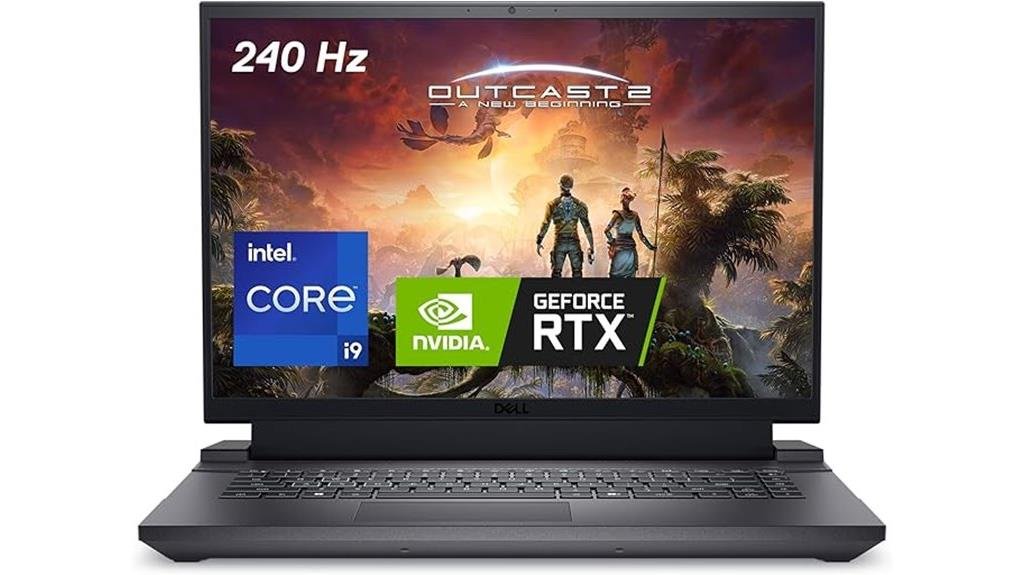
For many enthusiasts, the dream of high-fidelity gaming often comes down to a fundamental choice: a powerful desktop PC or a sleek, portable gaming laptop. While the allure of gaming on the go is strong, making the right investment requires a thorough Cost-Benefit Analysis: The True Value of Gaming Laptops. It's not just about the sticker price; it's about understanding the long-term implications, performance trade-offs, and how each option truly fits into your life.
This isn't a simple "which is better" debate. Instead, we'll peel back the layers to reveal the nuanced value proposition of gaming laptops, helping you discern if their unique blend of convenience and power aligns with your priorities, or if a desktop still reigns supreme for your gaming sanctuary.
At a Glance: Key Takeaways
- Upfront Cost: Gaming laptops often appear cheaper initially as they're an all-in-one package, while desktops require separate purchases for peripherals (monitor, keyboard, mouse).
- Raw Performance: Desktops generally offer superior raw power and better cooling, leading to higher frame rates and graphics quality for the same price point.
- Portability: Laptops excel here, allowing gaming anywhere, but they come with caveats like weight, short battery life during gaming, and reliance on a power brick.
- Upgradability: Desktops are highly modular, extending their lifespan and value. Laptops have limited upgradability, making them a more fixed investment.
- Ergonomics: Desktops offer unparalleled customization for comfort and immersion. Laptops often lead to compromises in viewing angles and posture.
- Simplicity & Versatility: Laptops offer a "plug-and-play" convenience and can double as powerful mobile workstations.
The Elephant in the Room: Upfront Costs vs. Total Investment
Let's cut straight to the numbers. On the surface, a gaming laptop can seem like a steal compared to building or buying a desktop. You might look at a $1,500 gaming laptop and compare it to a $1,500 desktop tower, concluding the laptop is the better deal. But this initial comparison often overlooks critical components that quickly add up for desktop users.
A $1,500 gaming laptop is a complete system: it includes the display, keyboard, trackpad, and all internal hardware, ready to game right out of the box. There are no hidden costs. However, that $1,500 desktop tower is just that – the tower. To make it functional, you'll need to factor in:
- Monitor: A decent gaming monitor can range from $200 to $500, easily.
- Keyboard: Gaming keyboards vary from $50 to $150, or even more for enthusiast models.
- Mouse: A reliable gaming mouse will set you back $40 to $100.
- Speakers/Headset: Quality audio can range from $50 to $200.
Suddenly, your $1,500 desktop tower can easily morph into a $2,000+ setup, often significantly more, putting it well above the initial cost of a similarly priced laptop. Gaming laptops themselves span a wide range, from entry-level models around $800 up to high-end powerhouses exceeding $5,000. For immediate, all-inclusive gaming, the laptop presents a clear upfront advantage.
Performance: Where Desktops Flex Their Muscles
While a laptop and desktop might both boast an "RTX 4070" graphics card, don't let the identical naming fool you. This is one of the most significant areas where a Cost-Benefit Analysis reveals distinct differences.
Desktop Dominance: Gaming desktops hold a distinct edge in raw performance for a given price point. The reason is simple physics: space and cooling. Desktop components, especially the CPU and GPU, have the luxury of larger chassis designs. This ample room allows for much more robust cooling solutions, whether it's an array of powerful fans or intricate liquid cooling systems. Better cooling means components can run at higher clock speeds for longer durations without overheating. This translates directly into higher frame rates, the ability to play games at ultra-graphics settings, and a generally smoother, more consistent gaming experience.
Laptop Limitations: Gaming laptops, by their very nature, are designed to fit powerful hardware into a confined, thin chassis. This necessitates using "mobile" variants of CPUs and GPUs, which are engineered for lower power consumption and heat generation. Even so, the limited space often struggles to dissipate the heat produced by these components during intense gaming. This leads to a phenomenon known as "thermal throttling," where the CPU or GPU automatically reduces its clock speed to prevent overheating. The result? A laptop RTX 4070, for instance, will almost always perform at a lower level than its identically named desktop counterpart, delivering fewer frames per second and potentially requiring lower graphics settings to maintain playability.
In essence, if peak performance and pushing the absolute limits of graphics fidelity are your top priorities, a desktop will generally offer a more potent punch for your dollar.
The Portability Paradox: Freedom with Fine Print
The most obvious, undeniable benefit of a gaming laptop is its portability. This is the cornerstone of its value proposition for a specific demographic.
True Freedom for the Nomadic Gamer: For college students juggling dorm life and library sessions, frequent travelers who want to game in hotel rooms, or minimalists who need a single device for work, study, and play, a gaming laptop is a game-changer. It allows you to move your entire gaming setup with ease, transforming any desk or surface into a battle station. Imagine tackling a demanding creative project during the day and then unwinding with your favorite AAA title in the evening, all on one powerful machine.
The Reality Check: While the idea of gaming anywhere sounds idyllic, the reality of "portable" gaming laptops comes with a few significant asterisks:
- Weight: These aren't ultrabooks. Gaming laptops are typically heavy, often weighing between 5 and 7+ pounds, without even considering the power brick. Carrying one, plus accessories, can quickly become a burden.
- Power Brick: The power adapter for a gaming laptop is often large and heavy, adding considerable bulk to your bag. Without it, your gaming sessions will be severely limited.
- Battery Life: For demanding games, the battery life of a gaming laptop is notoriously poor, often under an hour. You'll almost always need to be plugged in to enjoy sustained, high-performance gaming. For lighter tasks, battery life is better, but it's not a true "unplugged" gaming machine for serious play.
- Heat: Due to the compact nature, gaming laptops can get extremely hot during use. While designed to handle it, resting them on your lap for extended periods can be uncomfortable, making them more of a "portable desktop" that performs best on a stable, well-ventilated surface.
So, while a gaming laptop offers freedom, it's a freedom that often requires proximity to a power outlet and a willingness to carry some heft. The crucial question is: how often will you actually game away from a power source, and how much does that portability truly enhance your lifestyle? To help weigh that value, consider asking yourself are gaming laptops worth it? for your specific use case.
Longevity & Upgradability: Investing for Tomorrow
When you purchase a gaming machine, you're not just buying for today's titles, but for the games of the next 3-5 years. This is where the long-term value proposition of desktops truly shines.
Desktop: The Modular Marvel: Gaming desktops are inherently modular. Their design allows for individual components – the graphics card (GPU), processor (CPU), RAM, and storage drives – to be easily swapped out and upgraded. This modularity means your desktop isn't a static investment; it's an evolving platform. As new technologies emerge or as games become more demanding, you can upgrade specific parts, such as popping in a newer, more powerful GPU, without replacing the entire system. This significantly extends the lifespan of your machine and can be a more cost-effective approach over a 5-6 year period. It also makes repairs much simpler and cheaper, as a single faulty component can often be replaced rather than writing off the whole unit.
Laptop: The Fixed Feature Set: Gaming laptops, in stark contrast, offer very limited upgradability. While you can often expand the RAM and storage (SSD), the CPU and, critically, the GPU are almost always soldered directly to the motherboard. This means the core performance you buy on day one is largely fixed for the entire life of the machine. As games evolve and demand more processing power, your laptop's performance ceiling remains stagnant. Over a half-decade, this can make a gaming laptop a more expensive proposition. When it struggles to run the latest titles, your only real upgrade path is to purchase an entirely new laptop. This can lead to a higher total cost of ownership in the long run if you consistently want to play new releases at high settings.
Consider your appetite for future-proofing and your budget horizon. Are you content with a fixed performance for a few years, or do you prefer the flexibility to incrementally improve your system?
User Experience & Ergonomics: Comfort is King
Beyond raw power and portability, how you interact with your gaming machine plays a huge role in overall satisfaction and comfort during long sessions.
Desktop: The Ergonomic Oasis: A gaming desktop provides unparalleled flexibility in setting up your personal gaming environment. You're free to choose any size or type of monitor you desire, from ultra-wide curved screens for immersive experiences to high refresh rate competitive displays. You can select your preferred keyboard, mouse, and headset – all designed for optimal comfort and performance. Furthermore, you have complete control over your seating posture, desk height, and peripheral placement, minimizing strain and maximizing immersion. This level of customization is crucial for long gaming marathons, helping to prevent neck, back, and wrist pain.
Laptop: Built-in Compromises: Gaming laptops come with a fixed, integrated setup. You're tied to the small (typically 15-inch or 17-inch) built-in screen, which, while often high-refresh, offers less screen real estate than a dedicated monitor. The integrated keyboard and trackpad, while varying in quality between models, can't match the ergonomic freedom of external peripherals. Many users find themselves hunching over the laptop, leading to poor posture and potential discomfort over extended gaming sessions. While you can connect external monitors and peripherals to a gaming laptop, doing so somewhat negates its "all-in-one" portability advantage and starts to make it function more like a desktop, but often with less comfortable underlying hardware.
For serious gamers who spend hours immersed in virtual worlds, the ergonomic flexibility of a desktop setup can significantly enhance both comfort and performance.
Simplicity & Dual-Purpose Value: The Laptop's Edge
While desktops excel in performance and upgradability, gaming laptops offer undeniable benefits in terms of simplicity and versatility that can represent significant value for certain users.
Effortless Integration: A gaming laptop is a single, complete purchase. There's no need to research compatible components, worry about assembly, or troubleshoot multiple hardware pieces. It "just works" out of the box, offering a plug-and-play experience that removes a layer of complexity and potential anxiety for less tech-savvy users. This convenience is a powerful benefit for those who prioritize immediate gratification and minimal setup hassle.
The Versatile Powerhouse: Beyond gaming, a gaming laptop is a formidable mobile workstation. Its powerful CPU and GPU are not only excellent for running the latest games but also for tackling demanding professional and creative tasks. Think video editing, 3D rendering, graphic design, CAD work, or even complex data analysis. For students pursuing STEM fields, designers, or content creators, a single gaming laptop can serve as an exceptionally powerful device for both intensive academic/professional work and high-performance entertainment. This dual-purpose capability can be a significant economic advantage, eliminating the need for separate, specialized machines.
The ability to combine work and play into one highly capable, relatively portable package is a core strength of the gaming laptop and a key part of its true value.
Dispelling Common Myths: What Not to Believe
It's easy to get caught up in marketing hype or outdated information. Let's clarify a few persistent misconceptions:
- "Gaming laptops overheat constantly and die quickly." Modern gaming laptops are designed with advanced cooling systems and thermal management. While they can run hot during intense sessions (and will throttle to protect components), catastrophic overheating leading to premature death is less common than it once was, especially with proper ventilation and care. However, components still degrade faster due to sustained heat compared to cooler desktop counterparts.
- "Gaming laptops are always slower than desktops." For the exact same price, a desktop will almost always offer better raw performance. However, a $2,500 gaming laptop can easily outperform a $1,000 desktop. The comparison needs to be equitable, either on price or specific component equivalence, and always acknowledge the mobile vs. desktop component distinction.
- "You can't do serious work on a gaming laptop." Absolutely false. As discussed, the powerful processors and graphics cards in gaming laptops make them excellent machines for video editing, 3D modeling, software development, and other compute-intensive professional tasks. Their only real limitation for work is often screen size and ergonomics, which can be mitigated with external peripherals.
Making Your Decision: Who Should Buy What?
Ultimately, the "right" choice isn't universal; it hinges entirely on your individual circumstances, priorities, and lifestyle.
Opt for a Gaming Desktop if:
- You have a dedicated space: A desk setup where you can spread out, house a tower, and arrange peripherals comfortably.
- You crave peak performance: You want the highest frame rates, best graphics settings, and most consistent performance for your budget.
- You're a hardware enthusiast: You enjoy the process of building, tinkering, and upgrading components.
- Longevity and future-proofing are key: You want a system that can evolve with technology and be easily repaired.
- Ergonomics are paramount: You value customizable comfort for long gaming sessions and wish to avoid potential strain.
Choose a Gaming Laptop if: - Mobility is non-negotiable: You are a student, travel frequently, move homes often, or simply need your powerful machine with you on the go.
- Versatility is valuable: You need one powerful device that seamlessly transitions between demanding school/work tasks and high-end gaming.
- Convenience and simplicity appeal: You prefer an all-in-one, ready-to-go solution without the hassle of component research and assembly.
- Space is limited: You live in a small apartment, dorm room, or simply lack the physical space for a full desktop setup.
- Your gaming habits align: You primarily game at a friend's house, on vacation, or in different rooms of your home, and are content to plug in when serious gaming begins.
Your Next Level: Beyond the Purchase
The cost-benefit analysis of gaming laptops reveals a complex interplay of upfront price, long-term value, performance capabilities, and personal convenience. While desktops generally offer superior power and upgradability for the money, gaming laptops carve out a significant niche for those whose lives demand mobility and versatility.
Before making your final choice, take a moment to honestly assess your primary gaming environment, your budget over the next 3-5 years, and how much you truly value the freedom to game anywhere. Whichever path you choose, understanding these trade-offs ensures your investment delivers the true value you expect, setting you up for countless hours of immersive, high-performance gaming.